Soul of the Butterfly:
Chicory Magazine and Baltimore’s Black Arts Activism Traveling Exhibition
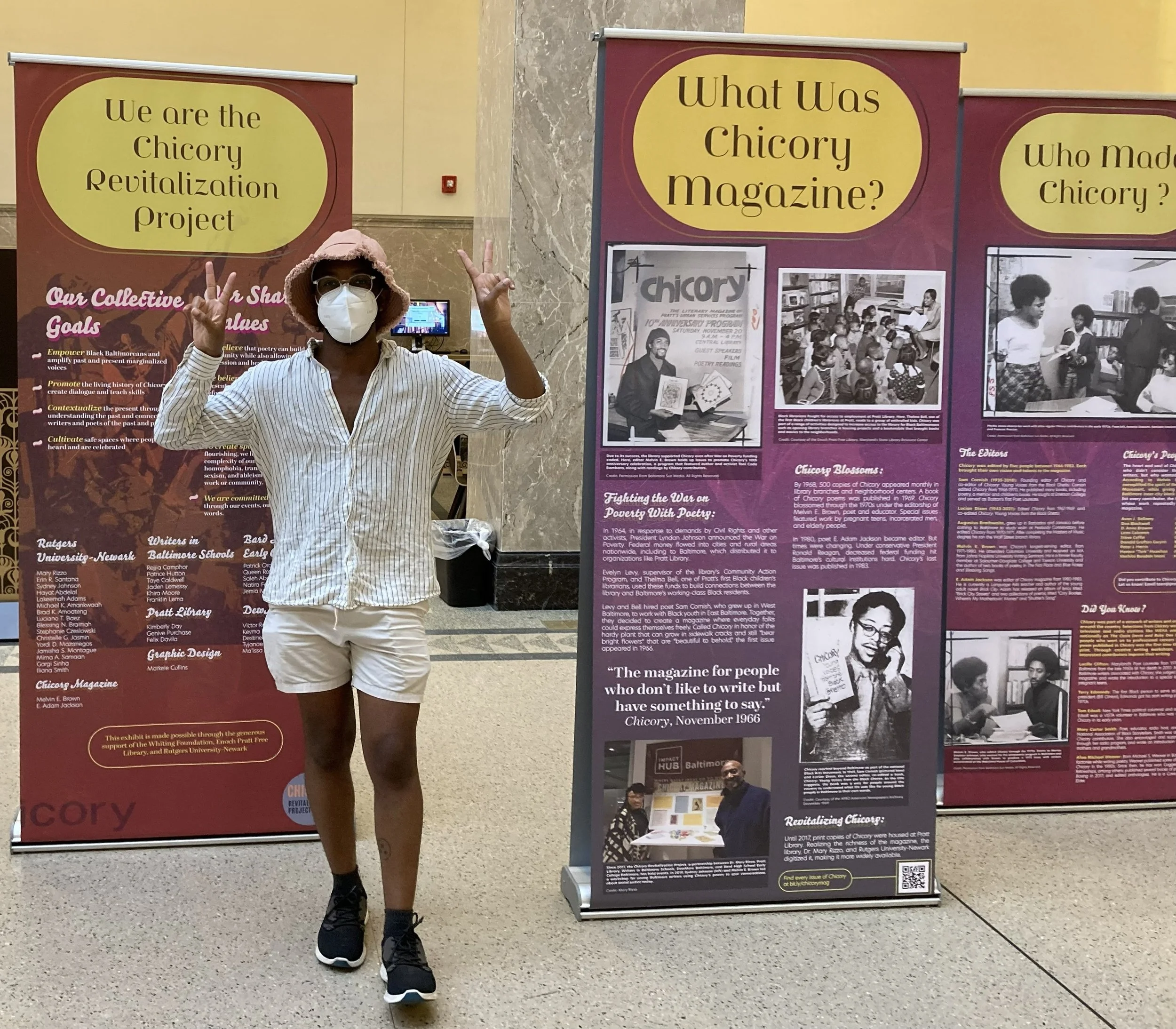
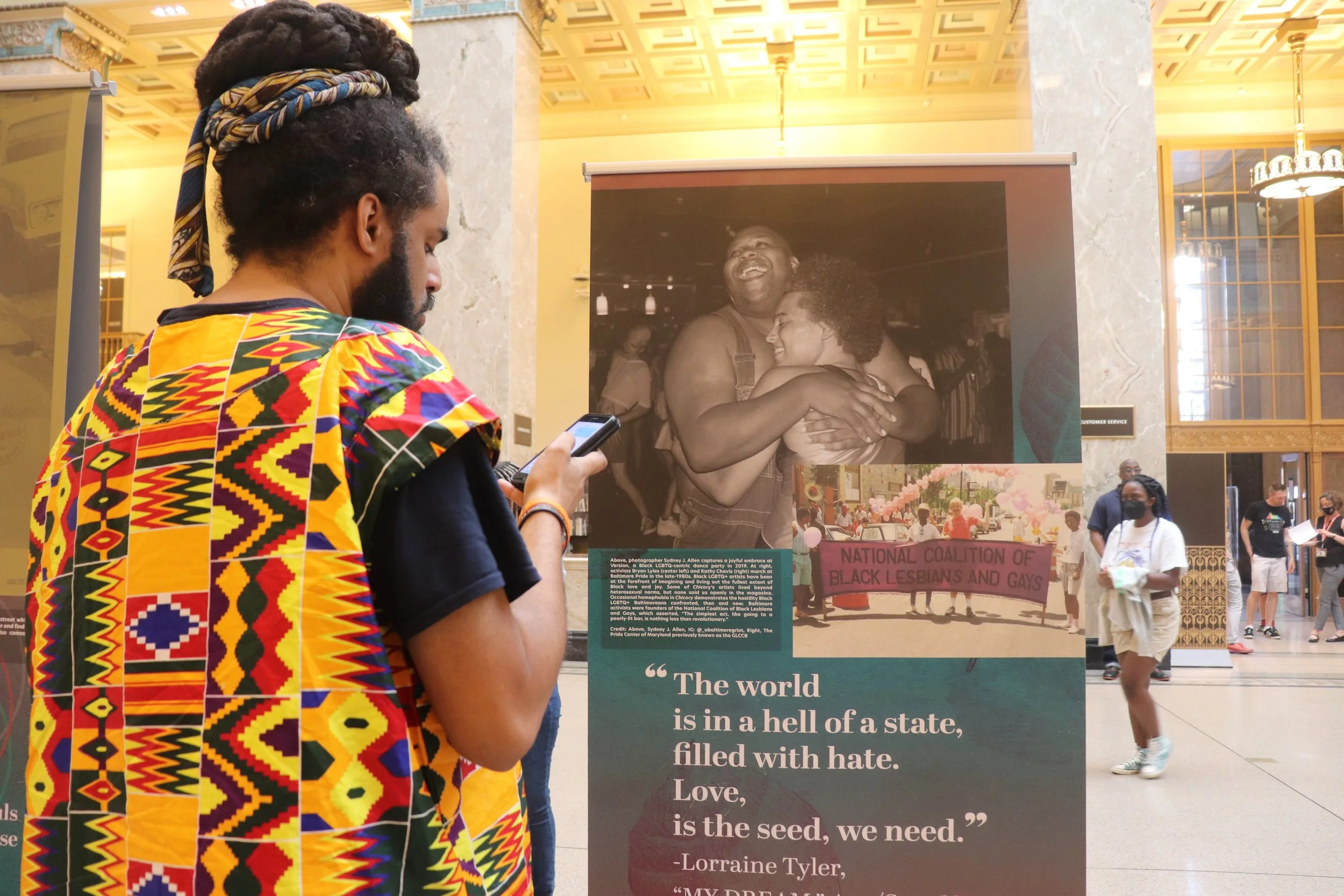
Can art be activism? Can a poem make a difference?
In the 1960s, Black writers in Baltimore said, "yes" in the pages of Chicory, a poetry magazine published by Pratt library from 1966-1983. Its five editors turned the magazine into a hotbed of radical Black culture, publishing writing by everyone from children to elders, from social workers to people in prison, about everything from bad housing and schools to celebrations of Black joy.
Soul of the Butterfly is a traveling exhibit that uses Chicory to tell the story of how Black artist-activists in Baltimore have been making change since the 1960s. Featuring poetry, artwork and photos, it reminds us why the Baltimore Afro-American called Chicory “the most authentic microphone of Black folks talking ever devised.” It connects past and present by featuring work by young writers, artists and creators in Baltimore in conversation with this history.
The exhibit includes 16 components:
14 panels mounted on 7 double-sided self-supporting banner frames, 34” x 80” each
1 single-sided, self-supporting magnetic board, 24” x 48”
Contains magnetic words for patrons to rearrange into their own poetry
1 double-sided, self-supporting foam core display, 34” x 60”
The exhibit is divided into five thematic sections which connect past and present.
History of Chicory tells the story of Chicory magazine’s origin and the role of its editors and contributors, including renowned poets Lucille Clifton and Afaa Michael Weaver.
“Black Institutions for Black Opportunity” looks at how Black Baltimoreans have demanded reform of existing institutions and created their own institutions to support Black self sufficiency and self determination. Focused on educational and economic opportunity, it tells the stories of independent Black institutions like the SOUL School, a Black nationalist school in West Baltimore.
“Claiming Space in the Face of Displacement” discusses residential segregation and displacement of Black Baltimoreans. It shows how Chicory writers and artists and current activists use art to share their stories, spur protests, and create public spaces for Black cultural expression.
“Black Art Heals” examines the structural causes for mental health issues in the Black community, including the effects of drug use and incarceration. It shows the power of art to help Black communities heal from oppression and marginalization. It also highlights how Chicory artists expressed joy in their Black identity and community, and wrestled with the relationship between Blackness and gender and sexuality
Baltimore’s Young Artist Contributions: Our curation team included young Baltimore artist-activists who contributed their work to the exhibit to create a dialogue between the past, present, and future. Their materials are featured in the exhibit panels, as well as through a literary ‘zine (created by students at Bard High School Early College Baltimore), and an interactive that invites visitors to create their own poetry.
Soul of the Butterfly was co-curated by a team of students at Rutgers University-Newark, Bard High School Early College Baltimore, Dewmore Baltimore, and Writers in Baltimore Schools led by Dr. Mary Rizzo and Erin Santana.
To inquire about hosting the exhibit, email chicorybaltimore@gmail.com